Friday, 8 March 2013

Typhoon

A typhoon is a tropical cyclone (whirlwind) occurring in the western Pacific or Indian oceans.
The identical phenomena in the USA is called a  hurricans.

Wednesday, 6 March 2013

The Dutch landscape

The Dutch landscape consist of different landscapes
  • Dunes
  • Löss 
  • Peat
  • River - clay
  • Sand
  • Seaclay

Dunes


Löss


Peat


Rivers clay


Sand


Sea clay


Geological time scale

The geological time scale is the geologic history of the planet from formation to the present. 

The geologic time scale is used by geologists, paleontologists, and other earth scientists to describe the timing and relationships between events that have occurred throughout Earth's history. 

The geologic time scale starts with large divisions of time called eons and is subdivided into successively smaller units of time based on dominant lifeforms, extinction events, even climate.  


Geological time scale


Cenozoic


Quaternary period
Holocene epoch
10,000 years

Pleistocene epoch
1.8 million years


Tertiary period
Pliocene
Miocene
Oligocene
Eocene
Palaeocene


65.5 million years

Mesozoic


252 million years

Palaeozoic


542 million years

Precambrian


4.6 billion years


Friday, 1 March 2013

Number of inhabitants per continent

The next schedule shows the number of inhabitants per continent (2011).


          population in millions    proportion
Asia 4216 60 %
Africa 1072 15 %
Europe 740 11 %
South America 585 8 %
North America 344 5 %
Australasia 39 1 %
Antartica 0 0 %
World 6996 100 %


War on drugs

War on Drugs is a campaign undertaken by the United States government to stop the production of illegal drugs in Latin America. This initiative includes a set of drug policies of the United States that are intended to discourage the production, distribution, and consumption of illegal drugs.

By spraying the drugs crops (coca plants) with agricultural pesticides (using airplanes) and by destroying the coca plants. The United States also supports the Colombian government with money, satellite pictures and (military) aircrafts.


Coca bushes in Columbia.


Thursday, 28 February 2013

Informal sector


The informal sector or informal economy


The informal sector or informal economy is that part of an economy that is not taxed, monitored by any form of government, or included in any gross national product (GNP), unlike the formal economy. 


Other terms used to refer to the informal sector can include 

  • The black market 
  • The shadow economy
  • Clandestine Activities
  • The hidden Sector
  • The informal Economy
  • Informal Opportunities
  • The invisible Sector
  • One-Person Enterprise
  • The parallel economy
  • The shadow Economy
  • The underground Economy
  • The unobserved Economy
  • The unofficial Economy


Many of the names by which the 'informal' sector is called - as listed below - essentially characterizes it in terms of what it is not: it is not the formal sector (non-formal), it is not controlled by the government (non-plan, hidden, unofficial, unrecorded), it is not legal (illegal, black, shadow) and it is not taxable (unrecorded, parallel).


Examples of the informal sector


Flower Vendor in India.


Street Vendor in Pakistan.


Cigarette vendor in the Philippines.


Farmer's Choice Sausage Cart. These carts have a water panel directly underneath the sausages. Inside of the cart there is a charcoal heater that keeps the water warm and thus the sausages are both warm and juicy.


Mobile phone scratch card vendor in Nigeria.


Informal Recycling Industry.


Roadside Bicycle Repair.


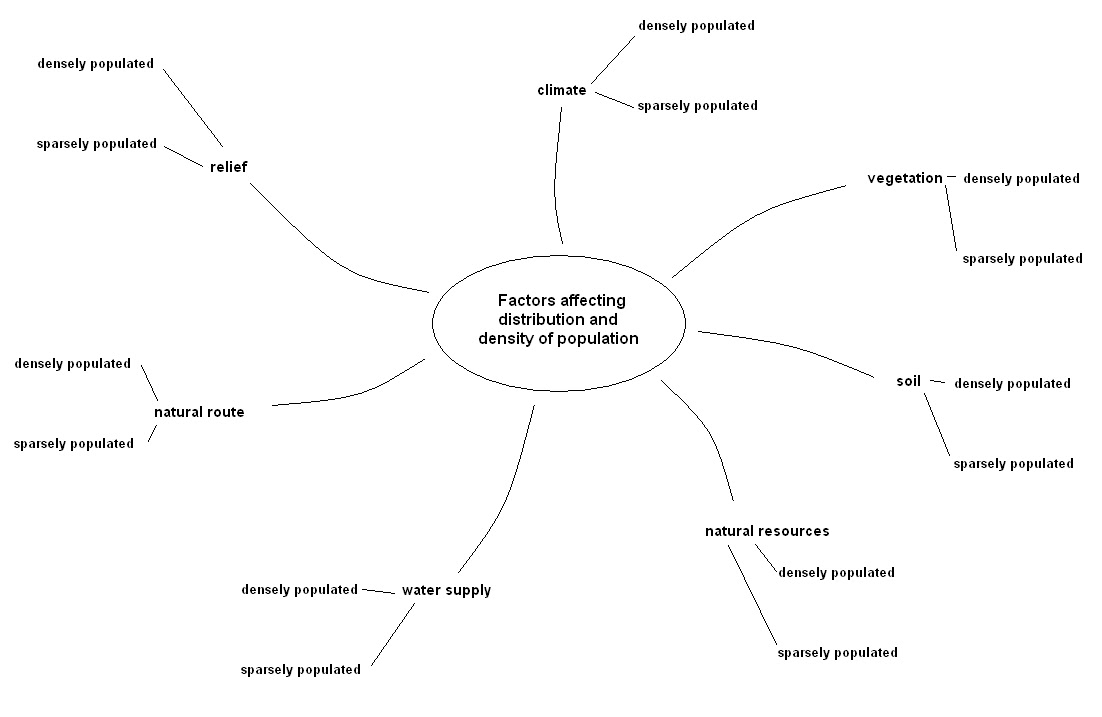
Factors affecting distribution and density of population

Mindmap : Factors affecting distribution and density of population.


Glaciers in Greenland


Tropical rainforest - Amazone river basin.


Dutch landscape.


Unfertile soil.


Harvest time.


High mountain peaks in Switserland.


Building tunnels in Switserland.


Infrastructure in Switserland.