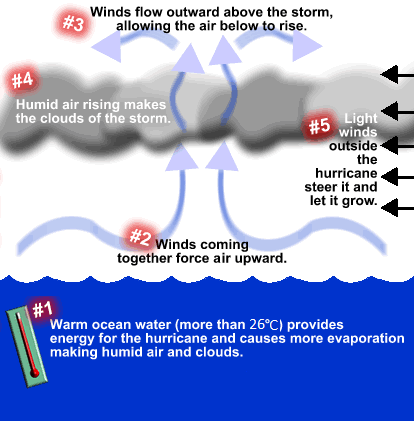
A hurricane is a type of tropical cyclone or severe tropical storm that forms in the southern Atlantic Ocean, Caribbean Sea, Gulf of Mexico, and in the eastern Pacific Ocean. A typical cyclone is accompanied by thunderstorms, and in the Northern Hemisphere, a counterclockwise circulation of winds near the earth’s surface.
Typhoons
A typhoon is a mature tropical cyclone that develops in the northwestern part of the Pacific Ocean between 180° and 100°E.
What does a hurricane or typhoon need?
Like any tropical cyclone, there are different main requirements for hurricane or typhoon formation and development:
- sufficiently warm sea surface temperatures,
- atmospheric instability,
- high humidity in the lower to middle levels of the troposphere,
- enough Coriolis force to develop a low pressure center,
- a pre-existing low level focus or disturbance, and
- low vertical wind shear.

The Saffir-Simpson hurricane wind scale
The Saffir-Simpson hurricane wind scale classifies hurricanes into five categories based on their sustained wind speed at the indicated time. The Saffir-Simpson Hurricane Wind Scale provides information on wind impacts only. The scale does not address the potential for other hurricane-related impacts, such as storm surge, rainfall-induced floods, and tornadoes.
Hurricanes reaching Category 3 and higher are considered major hurricanes because of their potential for significant loss of life and property. Category 1 and 2 storms are still dangerous, however, and require preventive measures.
To prepare for a hurricane, you should take the following measures:
- To begin preparing, you should build an emergency kit and make a family communications plan.
- Know your surroundings.
- Learn the elevation level of your property and whether the land is flood-prone. This will help you know how your property will be affected when storm surge or tidal flooding are forecasted.
- Identify levees and dams in your area and determine whether they pose a hazard to you.
- Learn community hurricane evacuation routes and how to find higher ground. Determine where you would go and how you would get there if you needed to evacuate.
- Make plans to secure your property:
- Cover all of your home’s windows. Permanent storm shutters offer the best protection for windows. A second option is to board up windows with 5/8” marine plywood, cut to fit and ready to install. Tape does not prevent windows from breaking.
- Install straps or additional clips to securely fasten your roof to the frame structure. This will reduce roof damage.
- Be sure trees and shrubs around your home are well trimmed so they are more wind resistant.
- Clear loose and clogged rain gutters and downspouts.
- Reinforce your garage doors; if wind enters a garage it can cause dangerous and expensive structural damage.
- Plan to bring in all outdoor furniture, decorations, garbage cans and anything else that is not tied down.
- Determine how and where to secure your boat.
- Install a generator for emergencies.
- If in a high-rise building, be prepared to take shelter on or below the 10th floor.
- Consider building a safe room.