
Showing posts with label US. Show all posts
Showing posts with label US. Show all posts
Thursday, 2 November 2017
Wednesday, 9 November 2016
The Villages - an age-restricted, gated community in Florida
The
Villages is a master-planned retirement community, an age-restricted community in
Sumter County, Florida, United States.


The
Villages consistently ranks as a very high growth area. The US Census ranked
The Villages as the fastest-growing U.S. city for the second year in a row. The
Villages has more than doubled in size since 2010. As of April 2016, the total
population of retirement community The Villages reached 55,000 people.

The
Villages offers numerous forms of recreation. The majority of the costs are
paid for via the monthly amenities fee assessed to residents. The centerpiece
of The Villages is its numerous assortment of golf courses. The ability to play
"Free Golf for Life" is a key component of The Villages advertising
campaigns. In addition, The Villages operates numerous recreation centers. These
centers offer local adult-only pools as well as horseshoe, and shuffleboard
courts, fitness centers and stages for theatrical and musical productions. Beyond
the golf courses and recreation centers, The Villages also operates numerous
softball fields, a polo stadium and a woodworking shop, plus the Lifelong
Learning College.
The
Villages is a gated community known for low crime rates.

Thursday, 8 September 2016
The United States–Mexico Border
The United States–Mexico border is the international border between the United States and Mexico.

It runs from California (in the west) to Texas (in the east). It covers a variety of terrains, ranging from major urban areas to inhospitable deserts.

The United States–Mexico border has the highest number of legal crossings of any land border in the world. Over five million cars and trucks travel through the border annually. According to Vulliamy, one in five Mexican nationals will visit or work in the United States at one point in their lifetime. As of 2010, the border is guarded by more than twenty thousand Border Patrol agents, more than at any time in its history. However, they only have "effective control" of less than 1,100 km of the 3,145 km of total border, with an ability to actually prevent or stop illegal entries along 208 km of that border. The border is paralleled by United States Border Patrol Interior Checkpoints on major roads generally between 65 and 120 km from the U.S. side of the border, and garitas generally within 50 km of the border on the Mexican side.

Drug trafficking tunnel under the U.S.-Mexico border used by the Sinaloa Cartel
There are an estimated half a million illegal entries into the United States each year. Border Patrol activity is concentrated around big border cities such as San Diego and El Paso which do have extensive border fencing.

It runs from California (in the west) to Texas (in the east). It covers a variety of terrains, ranging from major urban areas to inhospitable deserts.

The United States–Mexico border has the highest number of legal crossings of any land border in the world. Over five million cars and trucks travel through the border annually. According to Vulliamy, one in five Mexican nationals will visit or work in the United States at one point in their lifetime. As of 2010, the border is guarded by more than twenty thousand Border Patrol agents, more than at any time in its history. However, they only have "effective control" of less than 1,100 km of the 3,145 km of total border, with an ability to actually prevent or stop illegal entries along 208 km of that border. The border is paralleled by United States Border Patrol Interior Checkpoints on major roads generally between 65 and 120 km from the U.S. side of the border, and garitas generally within 50 km of the border on the Mexican side.

Drug trafficking tunnel under the U.S.-Mexico border used by the Sinaloa Cartel
There are an estimated half a million illegal entries into the United States each year. Border Patrol activity is concentrated around big border cities such as San Diego and El Paso which do have extensive border fencing.
Wednesday, 7 September 2016

Tuesday, 6 September 2016

Thursday, 26 March 2015
The dangerous border between Mexico and the United States
The USA – Mexico border is one of the most dangerous and porous borders in the world.

Each month, assisted by smugglers working with drug cartels, thousands of Hispanic immigrants try to cross the frontier between Mexico and the United States.
On the eve of the US mid-term elections, the influx of illegal immigrants has re-opened the debate on immigration. Many are caught and try again, once, twice, ten times if necessary, while those who make it through are often hunted down by federal agents once on American soil.
On both sides of the border, our reporters met with those who want to emigrate and those who try to catch them.
VIDEO: Mexico-USA-danger-ridden-border-immigration-illegal
Each month, assisted by smugglers working with drug cartels, thousands of Hispanic immigrants try to cross the frontier between Mexico and the United States.
On the eve of the US mid-term elections, the influx of illegal immigrants has re-opened the debate on immigration. Many are caught and try again, once, twice, ten times if necessary, while those who make it through are often hunted down by federal agents once on American soil.
On both sides of the border, our reporters met with those who want to emigrate and those who try to catch them.
Friday, 30 August 2013
Colonisation of the US
European colonisation of the Americas began as early as the 10th century (Vikings, Norse sailors)
Extensive European colonisation began in 1492, when a Spanish expedition headed by Christopher Columbus sailed west to find a new trade route to the Far East but inadvertently found the Americas. European conquest, large-scale exploration, and colonization soon followed.
The next map shows the European claims in America in 1750.

When the United States won its independence from Great Britain at the end of the Revolutionary War, the country nearly doubled in size.
After 1783, the United States gained new land from European countries, neighboring countries (such as Mexico), and Indian tribes. This was done through purchases (paying for it), wars and treaties, and the forced removal of Indian tribes from the lands they had occupied for thousands of years.
The 13 original British colonies became the country's first states, but they were not the same size and shape as they are today. It took more than 176 years — from 1783 to 1959 — for all 50 states to become part of the United States of America.

Extensive European colonisation began in 1492, when a Spanish expedition headed by Christopher Columbus sailed west to find a new trade route to the Far East but inadvertently found the Americas. European conquest, large-scale exploration, and colonization soon followed.
The next map shows the European claims in America in 1750.

When the United States won its independence from Great Britain at the end of the Revolutionary War, the country nearly doubled in size.
After 1783, the United States gained new land from European countries, neighboring countries (such as Mexico), and Indian tribes. This was done through purchases (paying for it), wars and treaties, and the forced removal of Indian tribes from the lands they had occupied for thousands of years.
The 13 original British colonies became the country's first states, but they were not the same size and shape as they are today. It took more than 176 years — from 1783 to 1959 — for all 50 states to become part of the United States of America.

Wednesday, 10 October 2012
Gated community
A gated community is a housing estate containing controlled entrances for pedestrians, bicycles, and cars. Gated communities are often characterized by walls and fences.

Some gated communities are staffed by private security guards and are often home to high-value properties. Several gated communities are secure enough to resemble fortresses and are intended as such.
[The next video shows a gated community in Colorado.]
Gated communities usually consist of small residential streets and include various shared amenities. For smaller communities this may be only a park or other common area. For larger communities, it may be possible for residents to stay within the community for most day-to-day activities.
Some gated communities are set up as retirement villages.
[The next video shows a gated community in Berlin.]

Some gated communities are staffed by private security guards and are often home to high-value properties. Several gated communities are secure enough to resemble fortresses and are intended as such.
[The next video shows a gated community in Colorado.]
Gated communities usually consist of small residential streets and include various shared amenities. For smaller communities this may be only a park or other common area. For larger communities, it may be possible for residents to stay within the community for most day-to-day activities.
Some gated communities are set up as retirement villages.
[The next video shows a gated community in Berlin.]
Tuesday, 9 October 2012
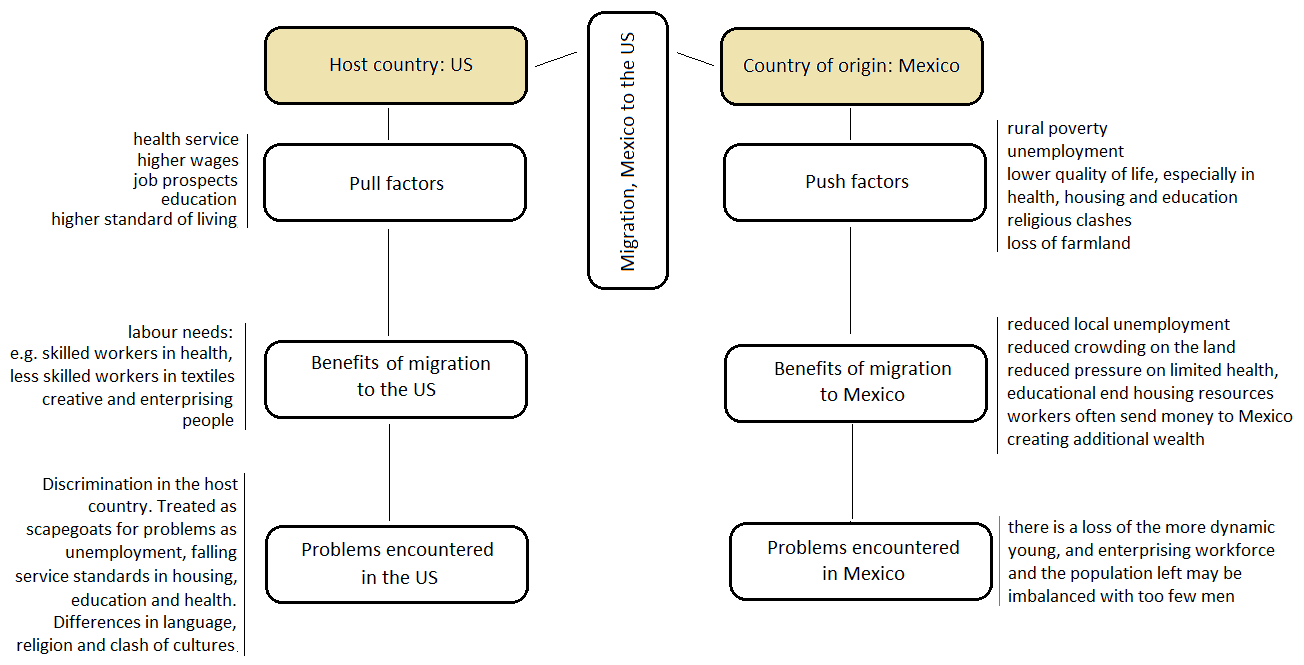
Wednesday, 3 October 2012
U.S. Population distribution by county
The next map shows the U.S. population distribution by county in 2010.


Percent ethnic groups in the United States by country
Percent White population by county:

Percent Black population by county:

Percent Hispanic population by county:

Percent Asian population by county:

Population change in the United States (counties)
The next map show the U.S. population change, by county 2007 to 2008.


Population projections of the United States (1960 - 2050)
The population of the United States, by racial and ethnic groups.
YEAR
|
WHITE
|
HISPANICS
|
BLACK
|
ASIAN
|
1960
|
85%
|
3.5%
|
11%
|
0.6%
|
2005
|
67%
|
14%
|
13%
|
5%
|
2050 (projected)
|
47%
|
29%
|
13%
|
9%
|

Population projections of the United States: 1960 - 2050.
YEAR
|
THE
POPULATION OF THE UNITED STATES
|
1960
|
180 million
|
1970
|
205 million
|
1980
|
227 million
|
1990
|
249 million
|
2000
|
274 million
|
2005
|
296 million
|
2010
|
307 million
|
2050
|
438
million
|
If
current trends continue, the population of the United States will rise to 438
million in 2050, from 296 million in 2005, and 82% of the increase will be due
to immigrants arriving from 2005 to 2050 and their U.S.-born descendants.
Of the
117 million people added to the population during this period due to the effect
of new immigration, 67 million will be the immigrants themselves and 50 million
will be their U.S.-born children or grandchildren.
Other key population projections
- Nearly one in five Americans (19%) will be an immigrant in 2050, compared with one in eight (12%) in 2005. By 2025, the immigrant, or foreign-born, share of the population will surpass the peak during the last great wave of immigration a century ago.
- The major role of immigration in national growth builds on the pattern of recent decades, during which immigrants and their U.S.-born children and grandchildren accounted for most population increase. Immigration’s importance increased as the average number of births to U.S.-born women dropped sharply before leveling off.
- The Latino population, already the nation’s largest minority group, will triple in size and will account for most of the nation’s population growth from 2005 through 2050. Hispanics will make up 29% of the U.S. population in 2050, compared with 14% in 2005.
- Births in the United States will play a growing role in Hispanic and Asian population growth; as a result, a smaller proportion of both groups will be foreign-born in 2050 than is the case now.
- The white population will increase more slowly than other racial and ethnic groups; whites will become a minority (47%) by 2050.
- The nation’s elderly population will more than double in size from 2005 through 2050, as the baby boom generation enters the traditional retirement years. The number of working-age Americans and children will grow more slowly than the elderly population, and will shrink as a share of the total population.
Wednesday, 26 September 2012
Melting pot
Melting pot.
In the eighteenth and nineteenth century, the metaphor of a (s)melting pot was used to describe the fusion of different nationalities, ethnicities and cultures.
It was used together with concepts of the United States as an ideal republic and a "city upon a hill" or new promised land.
It was a metaphor for the idealized process of immigration by which different nationalities, cultures, nationality, ethnicity and race were to blend into a new community /society.

The ethnic mosaic or the salad bowl concept suggests that the integration of the many different cultures of United States residents combine like a salad, as opposed to the melting pot.
In the ethnic mosaic or the salad bowl model, various American cultures are juxtaposed — like salad ingredients — but do not merge into a single homogeneous culture. Each culture keeps its own distinct qualities. This idea proposes a society of many individual, "pure" cultures in addition to the mixed culture that is modern American culture, and the term has become more politically correct than melting pot, since the latter suggests that ethnic groups may be unable to preserve their cultures due to assimilation.
Friday, 21 September 2012


Subscribe to:
Posts (Atom)